Dogs do not just tolerate human presence — they have evolved to understand us in ways no other animal can. Here is the remarkable science of how dogs read your gestures, your gaze, and even your intentions.
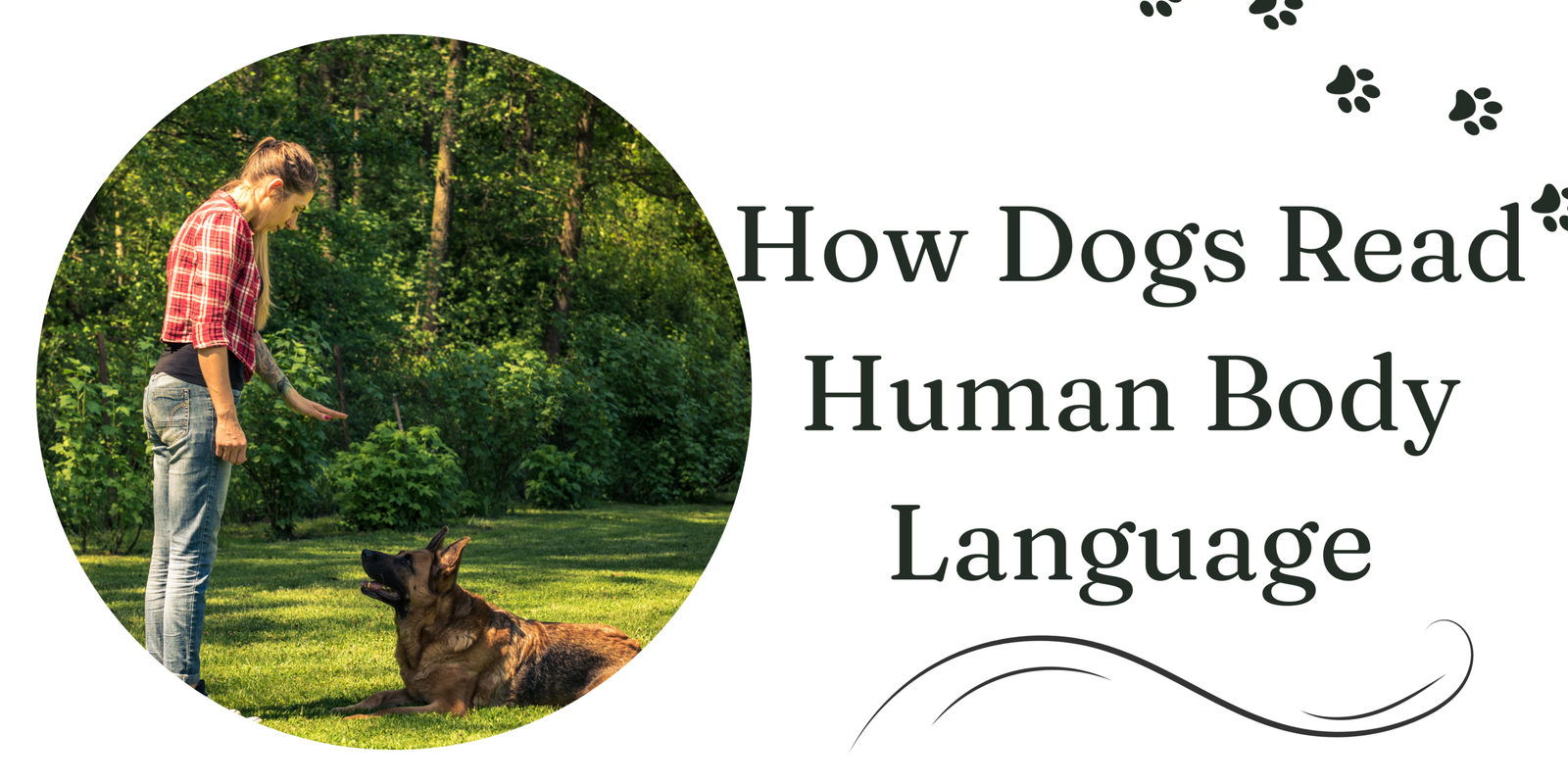
If you point at a hidden treat, your dog will likely look where you are pointing. This seems unremarkable until you realize how rare it is. Chimpanzees — our closest primate relatives — struggle to follow human pointing. Wolves, even when hand-reared, do not reliably use human gestures to find food. Dogs do it spontaneously, often from puppyhood. This is not learned trickery. It is evolutionary specialization.
The Pointing Paradox
Human pointing is a strange gesture. It is a referential signal — it directs attention to something distant, not to the hand itself. Most animals do not naturally interpret it this way. They look at the hand, not where the hand indicates.
In a seminal 2006 review, Miklósi and Soproni documented that dogs follow not just pointing, but a wide range of human communicative gestures — including head turns, eye gaze, and even foot-pointing — with a flexibility that surpasses most non-human species.
A 2021 study by Bray and colleagues tested 375 eight-week-old puppies — before they had been sent to foster homes, with minimal human interaction. The puppies followed human pointing gestures on their very first trial, with no learning curve. Genetics explained over 40% of the variation in their ability to follow pointing.
This is not training. This is biological preparedness.
Eye Contact: The Social Glue
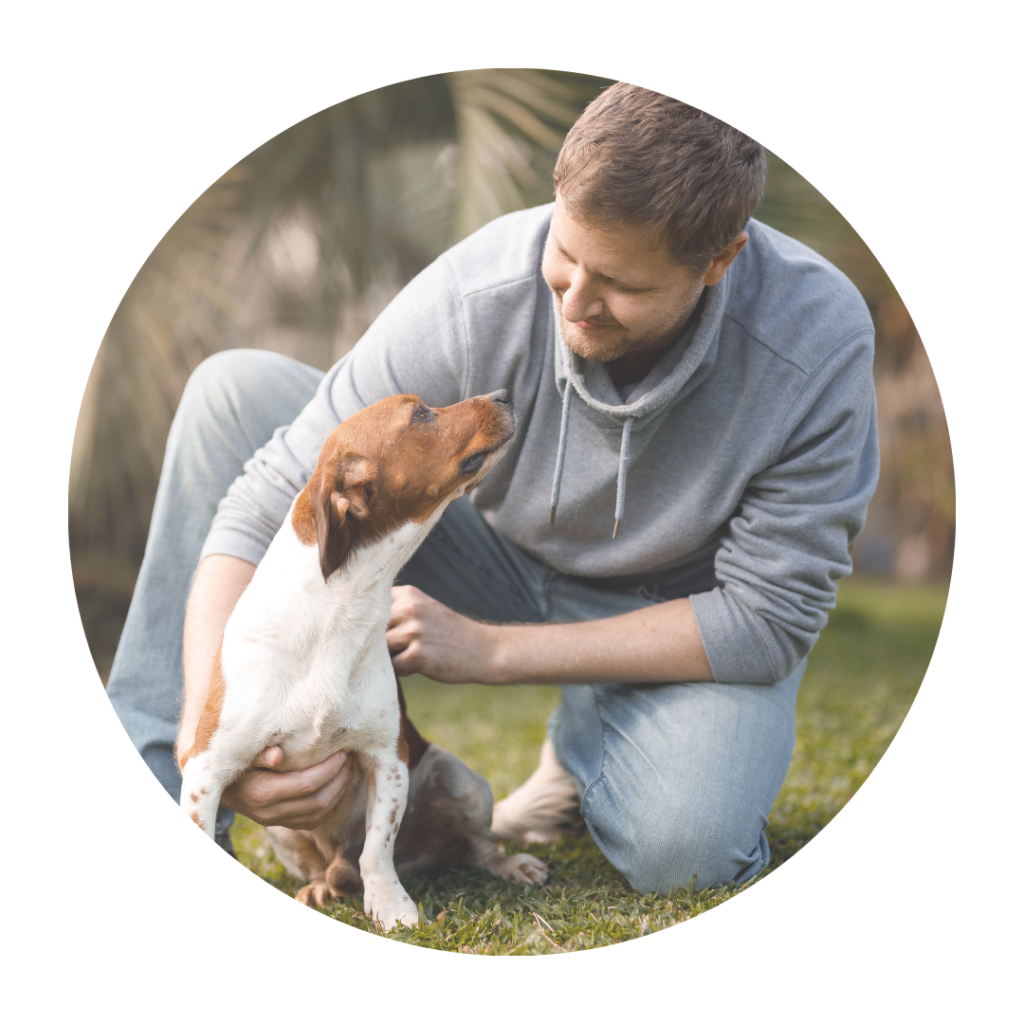
Dogs are one of the few non-human species that seek and sustain eye contact with humans. In a 2004 study, dogs preferred to beg from a person whose eyes were visible versus one wearing a blindfold — showing they use eye visibility as a cue to human attentiveness.
This sensitivity to the human face is not just about food. Eye contact between dogs and humans triggers oxytocin release in both species — the same hormone that bonds mothers and infants. Dogs have effectively hijacked our social bonding system by looking us in the eye (read more about the dog-human Oxytocin boost here).
Gaze Following and Perspective-Taking
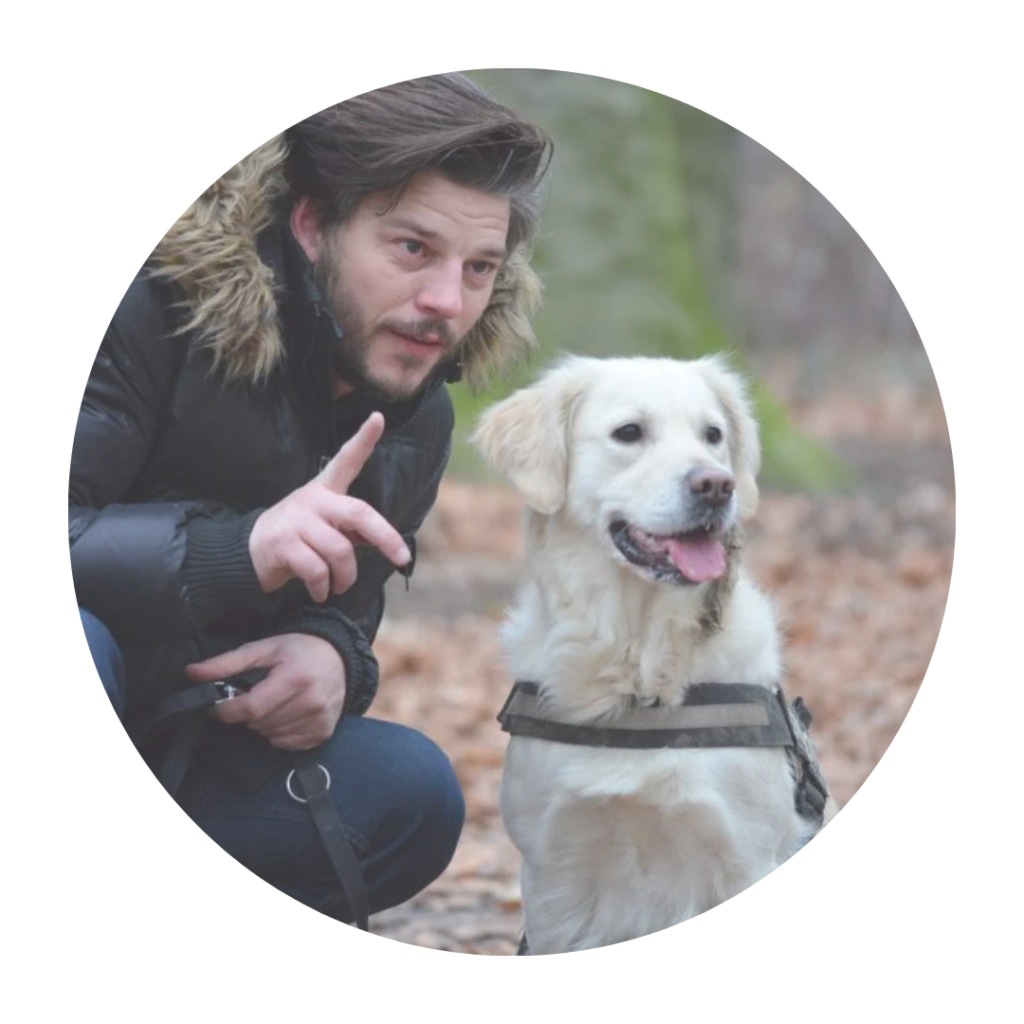
Dogs do not just follow pointed fingers. They follow your gaze. If you look at an object, your dog will often look there too. In one experiment, dogs given a “fetch” command reliably chose the toy that was visible to the human experimenter over one that was hidden behind a barrier — even though both were visible to the dog.
This suggests something remarkable: dogs have a functional understanding of what humans can and cannot see. They are not merely responding to cues; they are tracking your attentional state.
The Role of Ostension
Dogs are especially sensitive to what researchers call ostensive cues — signals that indicate you are trying to communicate with them. Eye contact, calling their name, and high-pitched “dog-directed speech” all function as “hey, I am talking to you” signals. When these precede a gesture, dogs are far more likely to follow it.
This means your dog is not just reading your body language. They are reading your communicative intent.
What This Means for Your Relationship
Understanding that your dog is evolutionarily tuned to read you changes how you interact with them:
- Be clear: Ambiguous or conflicting signals confuse dogs. If you say “come” while leaning away, your body language contradicts your words.
- Use eye contact deliberately: Brief, soft eye contact is reassuring. Staring can be threatening.
- Point meaningfully: Dogs use pointing naturally. Use it to direct their attention to things you want them to notice.
- Respect their reading skills: Your dog notices when you are distracted, tense, or sad — often before other humans do. They are not ignoring you; they are responding to signals you did not know you were sending.
The Bottom Line
Dogs have undergone a unique evolutionary trajectory that has equipped them to read human communicative signals with a sophistication unmatched by any other non-human animal. They follow your point, track your gaze, and calibrate their behavior to your attentional state. This is not obedience. It is interspecific social cognition — the product of thousands of years of co-evolution. Your dog understands you better than you might think.
Sources:
Bray, E.E. et al. (2021) — Early-emerging and highly heritable sensitivity to human communication in dogs. Current Biology, 31(14), 3132–3136.
https://doi.org/10.1016/j.cub.2021.04.055
Gácsi, M. et al. (2004) — Are readers of our face readers of our minds? Dogs (Canis familiaris) show situation-dependent recognition of human’s attention. Animal Cognition, 7(3), 144–153.
https://doi.org/10.1007/s10071-003-0205-8
Miklósi, Á. & Soproni, K. (2006) — A comparative analysis of animals’ understanding of the human pointing gesture. Animal Cognition, 9(2), 81–93.
https://doi.org/10.1007/s10071-005-0008-1
Soproni, K. et al. (2002) — Dogs’ (Canis familiaris) responsiveness to human pointing gestures. Journal of Comparative Psychology, 116(1), 27–34.
https://doi.org/10.1037/0735-7036.116.1.27
Sign Up For The Newsletter
Stay updated with new blog posts, dog behaviour ideas, seasonal reminders and news about courses and packages. No spam, unsubscribe anytime.