Growing up with a dog can be one of the great joys of childhood — but safety doesn’t happen by accident. Here’s what the research says about building a relationship that lasts.
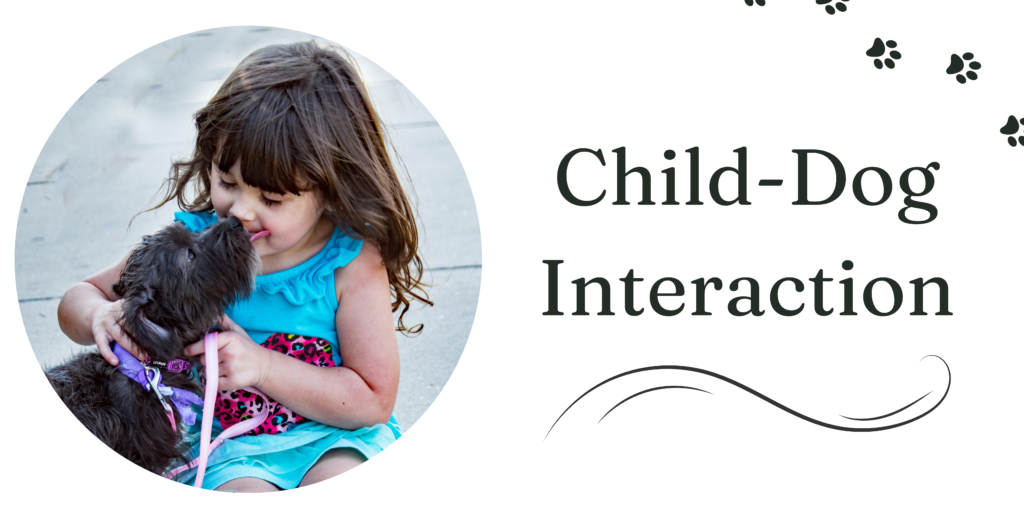
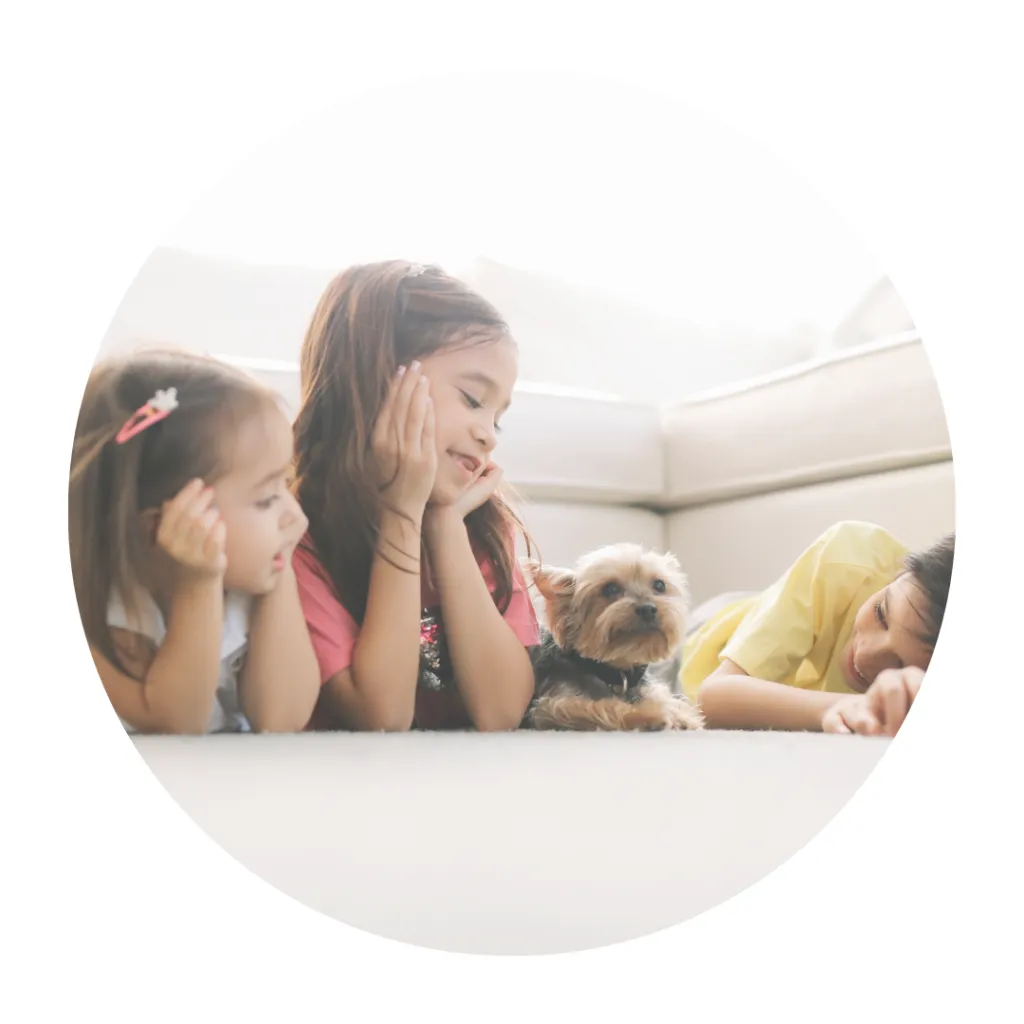
For many children, a dog is their first best friend. The bond can teach empathy, responsibility, and companionship. Recent research backs this up: a large Japanese birth cohort study found that children who lived with family dogs had a significantly lower risk of developmental delays in communication, gross motor skills, problem-solving, and personal-social domains. Australian research has shown that pre-schoolers from dog-owning households are 30–40% less likely to have conduct or peer problems and are more likely to show pro-social behaviours like sharing and cooperating.
But the reality is not always picture-perfect. Most dog bites to children come from dogs they know — often their own family dog — and they frequently happen during everyday interactions that look harmless. The good news is that most bites are preventable, and the responsibility lies squarely with us as adults.
Understand the Real Risk
Here is what research reveals about how and where children get bitten:
Most bites to young children happen at home, during positive interactions like petting, hugging, or kissing a familiar dog.
A parent is often in the room — but may not be watching closely enough. In one study, an adult was present in 60% of bites, yet the child still initiated a benign interaction that ended in a bite to the face.
Young children (under 7) are most at risk for face and head bites because their height puts them at mouth level. Older children are more often bitten on the extremities, usually outdoors by unfamiliar dogs.
Boys and younger children are at higher risk than girls and older children. Dogs in homes without yard space, dogs kept indoors for long hours, and dogs routinely sleeping in family bedrooms also show elevated bite risk.
This tells us something critical: bites are rarely the result of a “bad” child or a “bad” dog. They are usually the result of a mismatch between what a child thinks is affectionate and what a dog experiences as stressful or threatening.
Set Up the Environment for Success
Give your dog an escape route.
Every dog needs a safe, quiet place they can retreat to — a bed, a crate with the door open, or a gated-off room. But a safe spot only works if your dog can reach it before they feel trapped. Research shows that dogs confined to kennels, pens, or chained areas are at higher risk of biting children in the home, partly because confinement removes their ability to walk away.
Teach your child that when the dog is in their safe space, they are off-limits — no touching, no talking, no approaching.
Use physical barriers wisely.
Baby gates and closed doors are not punishments; they are management tools. If you have a toddler who is mobile and unpredictable, create physical separation during high-risk moments — mealtimes, when the dog is sleeping, or when you cannot actively supervise. When the dog is separated, give them something enriching to do: a stuffed Kong, a lick mat, or a safe chew. This keeps the experience positive for everyone.
Never corner a dog.
A dog that feels trapped — whether behind furniture, in a narrow hallway, or on a leash with no slack — is a dog that may feel forced to use their teeth. Always ensure your dog has a clear path away from the child.
Supervise Actively, Not Just Physically
Being in the same room is not the same as supervising. Active supervision means:
You are close enough to intervene immediately.
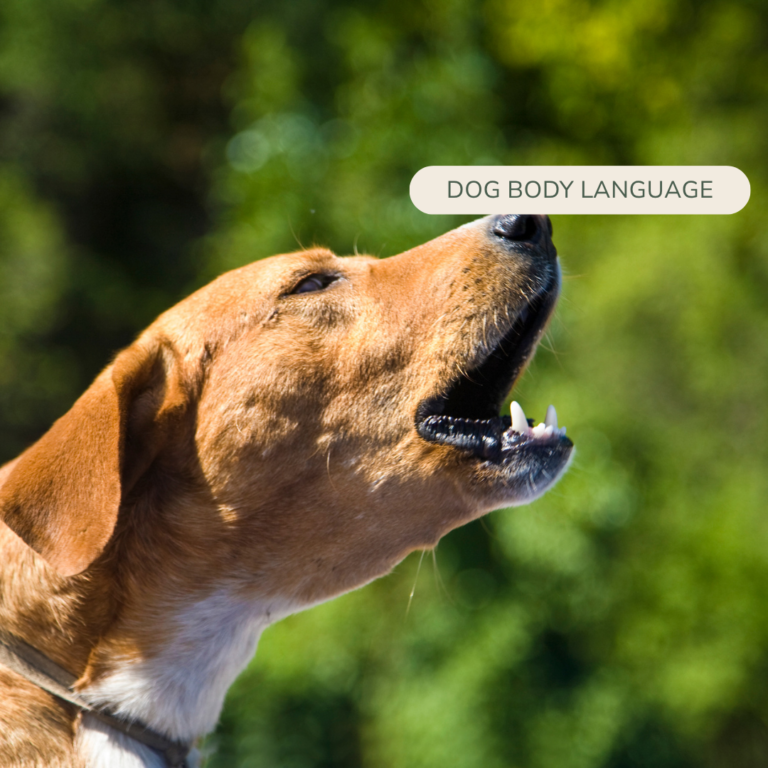
You are watching the dog’s body language — yawning, lip licking, turning away, stiffening, whale eye (showing the whites of the eyes), or a tucked tail.
You are watching the child’s behaviour — reaching, hugging, or moving unpredictably.
You are not distracted by your phone, a conversation, or another task.
If you cannot supervise actively, separate. It takes only a few seconds for a well-meaning hug to turn into a bite.
Teach Non-Negotiable Rules
Some interactions between children and dogs are never safe, no matter how gentle the dog seems:
No hugging, kissing, or lying on the dog. Dogs do not interpret these as affection. To a dog, a hug can feel like restraint — a threat.
No approaching a sleeping, eating, or chewing dog. Startling a dog or competing for a resource is a common trigger for bites.
No chasing, poking, pulling, or sitting on the dog.
No dressing up the dog or treating them like a toy.
Importantly, research shows that even “nice” touch can trigger a bite if the dog is in pain, anxious, or simply does not want to be touched. A study of dogs presented to a veterinary behaviour clinic after biting children found that three-quarters showed anxiety and half had medical conditions that may have contributed.
Regular veterinary check-ups are part of bite prevention.
Teach Your Child to Read the Dog
Children are capable of learning more than we sometimes assume. Research has shown that pre-schoolers as young as 3 can be taught to recognize when a dog is happy, scared, or angry by watching short videos and learning simple body-language cues — tail position, ear position, stillness vs. movement.
Teach your child:
Happy dog: Loose body, wagging tail, open mouth, approaching willingly.
Angry or stressed dog: Stiff body, hard stare, raised hackles, growling, showing teeth, snapping.
If they see a scared dog, the rule is simple: stop, back away, and tell an adult (Learn more about dog body language here).
Play the Right Way
Play is a wonderful bond-builder when it is safe for both sides. Good options include:
Fetch: Your child throws the toy; the dog retrieves. This keeps space between them and teaches the child that hands are not toys.
Hide and seek: The child hides; the dog finds them. This is fun, low-contact, and builds a positive association.
Training games: As children grow older, involve them in reward-based training sessions. This teaches responsibility and strengthens the human-animal bond through cooperation, not coercion.
Avoid roughhousing, wrestling, or tug-of-war that pits the child’s strength against the dog’s. These games blur boundaries and can escalate quickly.
Keep the Dog Enriched and Exercised
A dog with unmet physical and mental needs is more likely to be restless, reactive, and less tolerant of child antics. Daily walks, puzzle feeders, sniffing games, and training all help a dog stay calm. A tired, fulfilled dog is not a guarantee of safety, but an under-stimulated dog is a risk factor.
Build Responsibility Gradually
As children mature, they can take on age-appropriate care tasks:
Preschool: Helping fill the water bowl (with you holding it steady), throwing a ball, or calling the dog for dinner.
School-age: Preparing meals, basic grooming, or assisting with walks — always under adult supervision.
Teens: Taking on more independent care, provided they have demonstrated consistent, gentle handling.
Never leave a child under 12 alone with a dog for extended periods. Young children cannot be expected to make safety decisions on their own.
The Bottom Line
A safe child-dog relationship is built on three pillars: management (environmental control), supervision (active, not passive), and education (for both the child and the adult). The research is clear that most bites are not random acts of aggression — they are predictable events that occur when a dog’s warning signals go unread and their escape routes are blocked.
By setting clear boundaries, watching body language, and giving your dog the choice to walk away, you create the conditions for the friendship you hoped for when you brought them together.
Sources
Reisner, I.R. et al. (2011) — Behavioural characteristics associated with dog bites to children presenting to an urban trauma centre. Injury Prevention, 17(5), 348–353. https://doi.org/10.1136/ip.2010.029868
Messam, L.L.M.V. et al. (2018) — Factors Associated With Bites to a Child From a Dog Living in the Same Home: A Bi-National Comparison. Frontiers in Veterinary Science, 5, 66. https://doi.org/10.3389/fvets.2018.00066
Meints, K. et al. (2013) — Dog Bite Prevention: Effect of a Short Educational Intervention for Preschool Children. PLoS ONE, 8(3), e57783. https://doi.org/10.1371/journal.pone.0057783
Kienesberger, B. et al. (2022) — Child safety programs for primary school children decrease the injury severity of dog bites. European Journal of Pediatrics, 181, 709–714. https://doi.org/10.1007/s00431-021-04256-z
Kotaka, S. et al. (2021) — Association between Early Life Child Development and Family Dog Ownership: A Prospective Birth Cohort Study of the Japan Environment and Children’s Study. International Journal of Environmental Research and Public Health, 18(13), 7082. https://doi.org/10.3390/ijerph18137082
Reisner, I.R. & Shofer, F.S. (2008) — Medical evaluation of dogs with aggression or behavioral problems: 141 cases (1991–2001). Journal of the American Veterinary Medical Association, 233(10), 1562–1570. https://doi.org/10.2460/javma.233.10.1562