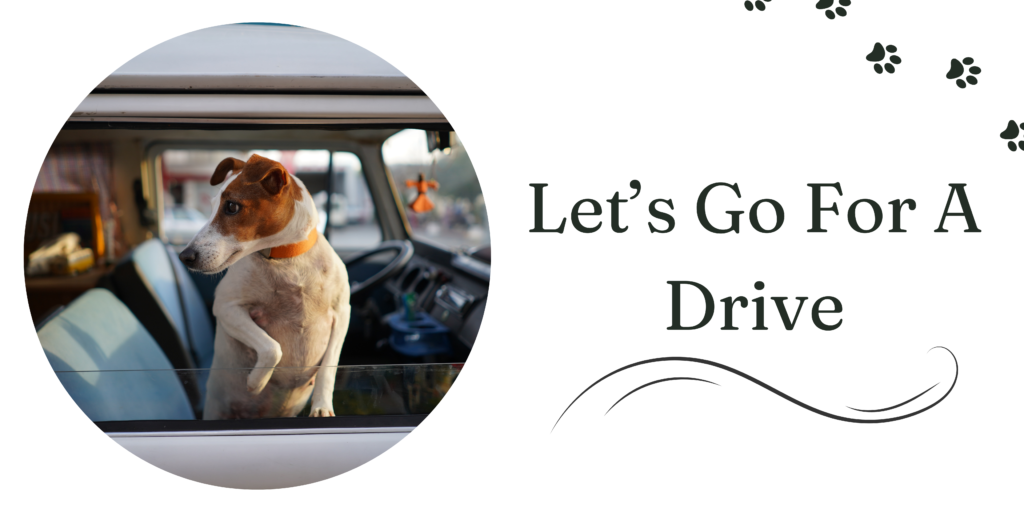
For some dogs, going on a drive in the car is the highlight of the day. For others, it is a source of genuine distress. Understanding why your dog struggles — and addressing it systematically — can turn travel from a nightmare into a neutral or even pleasant experience.
Many owners assume their dog “just doesn’t like the car.” But car aversion is not a personality quirk. It is almost always caused by one or more underlying factors: nausea, fear of noises, a past negative experience, or overwhelming excitement. The good news is that each of these has a solution.
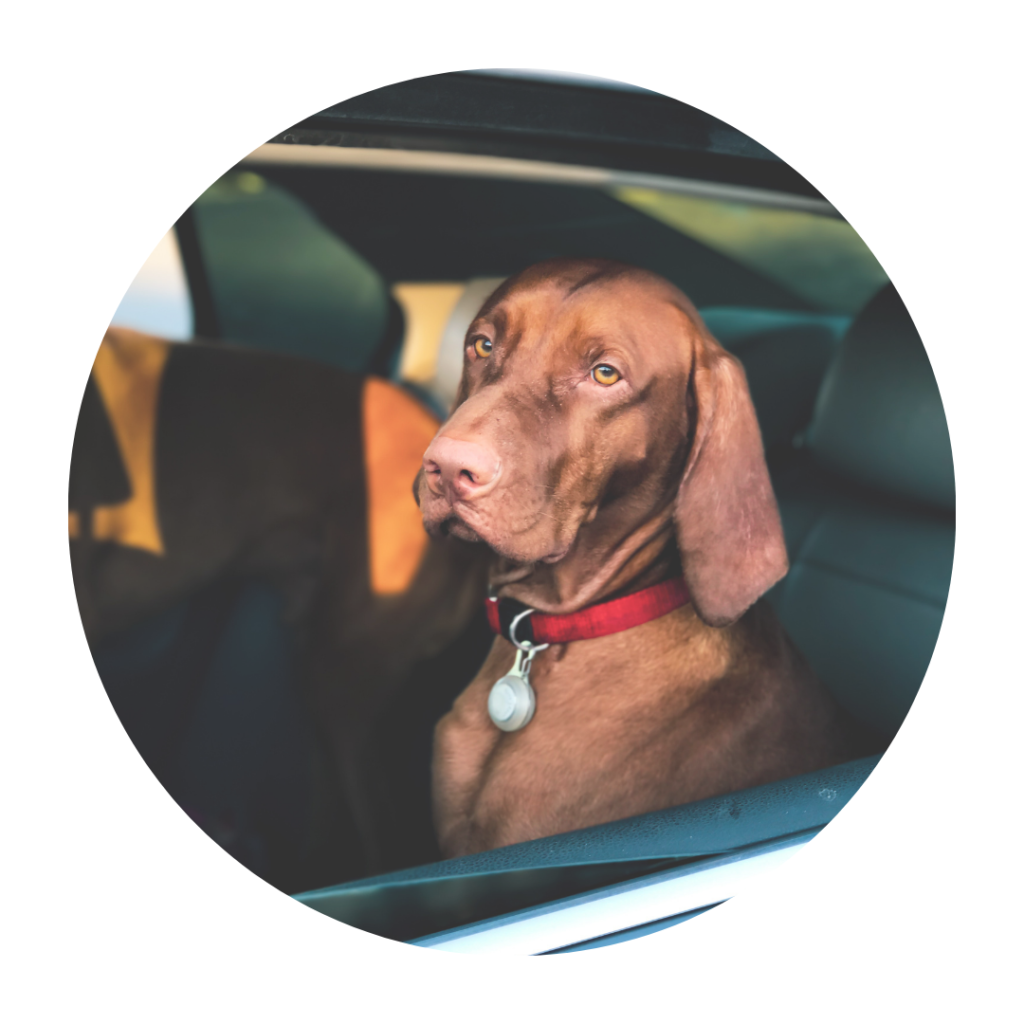
Rule Out Motion Sickness First
Before assuming your dog is anxious, consider whether they are nauseous. Dogs cannot tell us they feel sick, but they show it through drooling, repeated lip licking, panting, restlessness, whining, and of course vomiting. These signs overlap heavily with anxiety — and for good reason. Prolonged nausea conditions a dog to associate the car with feeling awful, which creates fear.
Motion sickness is particularly common in puppies because their vestibular system is still maturing. Many dogs grow out of it, but some do not. If your dog shows physical signs of nausea, talk to your veterinarian.
Practical tips for nauseous dogs:
- Withhold food for 2–4 hours before travel.
- Lower the windows slightly for fresh air circulation.
- Drive smoothly — avoid abrupt acceleration, braking, and sharp turns.
- Let your dog face forward if possible; looking out side windows can worsen nausea.
- Use window shades to reduce visual stimuli.
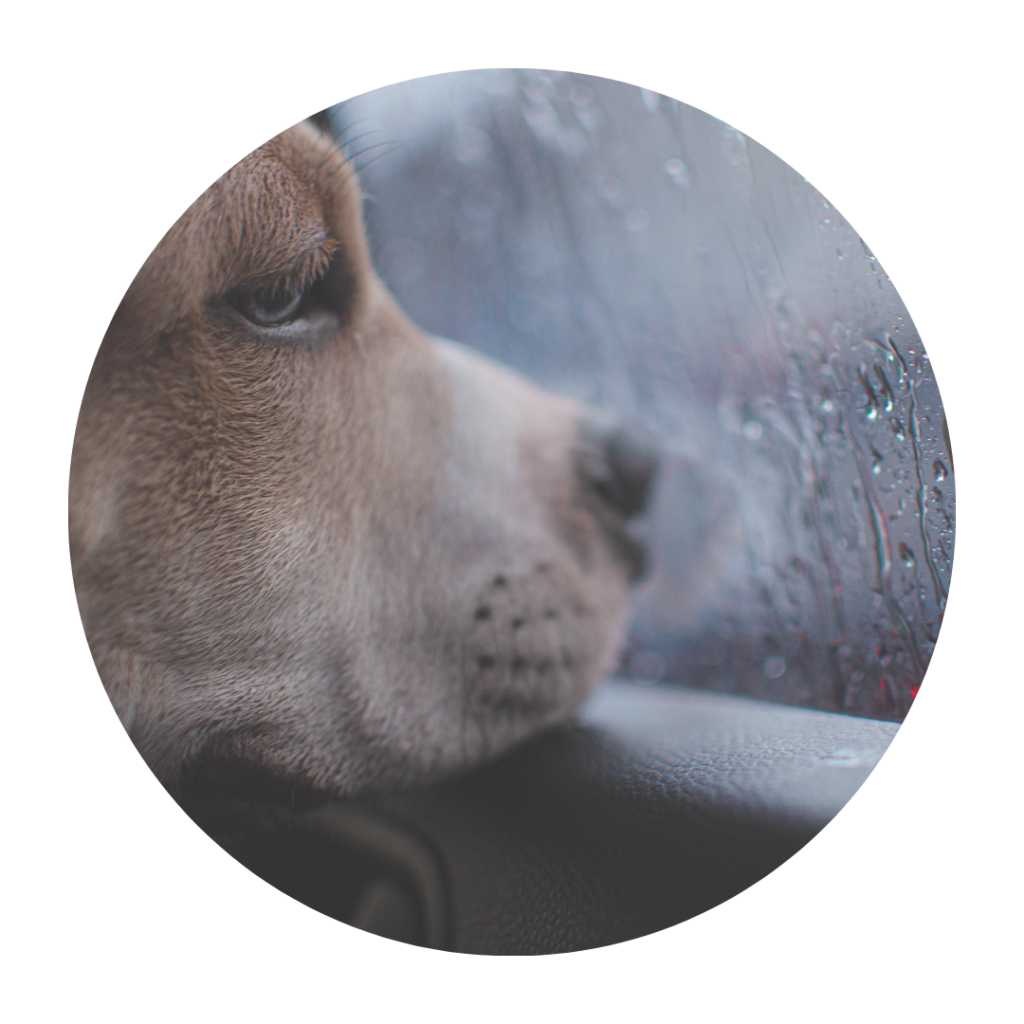
When Fear, Not Nausea, Is the Problem
If your dog is physically fine but still terrified, the cause is usually one of the following:
Noise sensitivity. A dog’s hearing is far more acute than ours. The engine, air conditioning, road noise, and even vibrations we cannot hear may be overwhelming. Some dogs are genetically predisposed to sound sensitivity. White noise, calming music (find it here), or simply padding the crate (if you use a crate) with sound-dampening blankets can help.
Traumatic associations. Rescue dogs transported long distances often develop conditioned fear of vehicles. Dogs who have been in car accidents may associate the car with pain. In these cases, the car itself has become a predictor of distress.
Overarousal. Some dogs become so excited about the destination that they cannot regulate themselves. The physiological arousal of excitement is chemically similar to fear, and prolonged anticipation can tip into genuine anxiety.
The Solution: Desensitization and Counterconditioning
For fear and overarousal, the treatment is the same: a gradual, structured training protocol called desensitization and counterconditioning. The principle is simple. You expose your dog to the car at an intensity so low that they feel safe, and you pair that exposure with something they love — usually high-value food. Over time, you increase the intensity in tiny increments.
Here is a sample progression. Only move to the next step when your dog is completely relaxed at the current one:
- Approach the car. Walk toward the parked car, feed treats, walk away. Repeat until your dog is happy to approach.
- Enter the stationary car. Ask your dog to hop in, feed treats, let them hop out. Do not start the engine.
- Sit in the stationary car. Close the door for a few seconds, feed treats, open the door. Gradually extend the duration.
- Engine on, stationary. Start the engine, feed treats, turn it off. The sound is the new variable.
- Short, slow trips. Drive to the end of the street and back. Feed treats during the ride.
- Gradually extend. Increase distance and duration only as your dog remains calm.
If at any point your dog shows stress signals — panting, drooling, trembling, trying to escape — you have moved too fast. Go back to the last successful step. Pushing through fear does not build confidence; it reinforces the association between the car and distress.
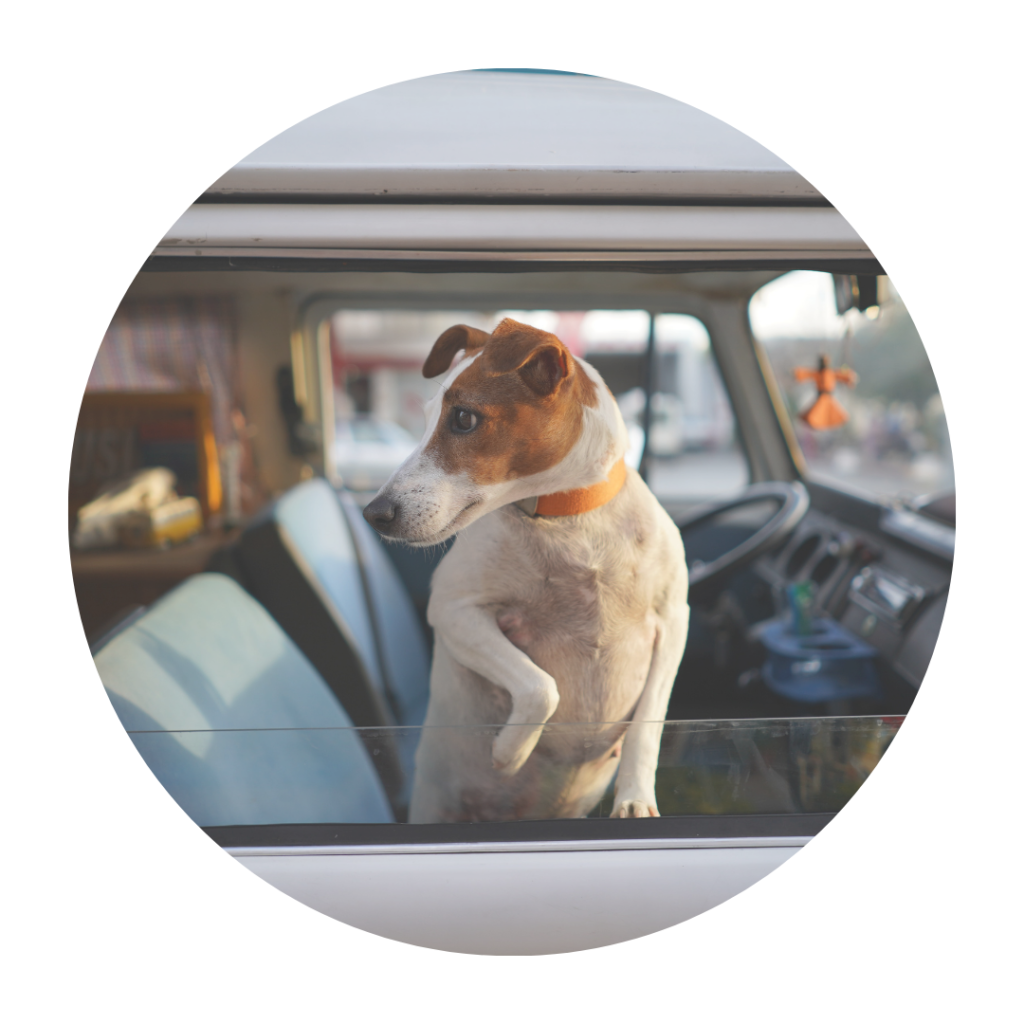
Keep Your Dog Safe
How your dog travels matters for their physical safety. In a crash, an unrestrained dog becomes a projectile. A 20-kilogram dog in a 50 km/h collision exerts roughly 1,000 kilograms of force — enough to kill a human passenger.
Not all restraints are equal. Independent crash testing by the Center for Pet Safety has found that most dog car harnesses fail in simulated collisions.
If you use a harness, choose one that has passed third-party crash testing. Alternatively, a sturdy, crash-tested crate secured in the back of the vehicle is one of the safest options. Avoid letting your dog ride loose in the front seat or with their head out the window.
Managing Excitement
For the overexcited dog, the goal is to teach calmness before the car becomes relevant:
- Exercise before the ride. A physically and mentally tired dog has less arousal to burn.
- Practice calm entry. Do not open the car door until your dog is sitting quietly. If they surge forward, close the door and wait.
- Neutral destinations. Take short trips that end nowhere exciting — around the block and back home. If every car ride ends at the dog park, the anticipation becomes unbearable.
- Sit in the driveway. Simply being in the car without going anywhere teaches your dog that the vehicle itself is not a predictor of wild excitement.
When to Seek Professional Help
If your dog’s car fear is severe — vomiting, panic, refusal to approach, or aggression when restrained — contact me or a certified ethologist in your region.
The Bottom Line
Car rides do not have to be stressful. By identifying whether your dog is nauseous, frightened, or overstimulated, and by addressing the root cause with patience and science-backed methods, you can help your dog feel safe on the road. The goal is not to force your dog to tolerate travel. It is to change how they feel about it.
Sources
Center for Pet Safety. — Certification Testing Protocol & Standards for Pet Travel Products.
https://www.centerforpetsafety.org/
https://www.centerforpetsafety.org/
Stellato, A.C. et al. (2019) — Effect of a Standardized Four-Week Desensitization and Counter-Conditioning Training Program on Pre-Existing Veterinary Fear in Companion Dogs. Animals, 9(10), 767.
https://doi.org/10.3390/ani9100767
https://doi.org/10.3390/ani9100767
Veterinary Partner — VIN (2021) — Car Ride Anxiety in Dogs and Cats.
https://veterinarypartner.vin.com/default.aspx?pid=19239&catId=102901&id=10052310
https://veterinarypartner.vin.com/default.aspx?pid=19239&catId=102901&id=10052310
Sign Up For The Newsletter
Stay updated with new blog posts, dog behaviour ideas, seasonal reminders and news about courses and packages. No spam, unsubscribe anytime.