The Engineering of a Dog’s Nose
Dogs have approximately 300 million olfactory receptors in their noses; humans have about 6 million. The part of the brain devoted to processing smells — the olfactory bulb — takes up roughly 40 times more relative space in a dog’s brain than in ours.
But it is not just receptor count. Research using computational fluid dynamics and MRI reconstructions of canine nasal cavities has revealed that dogs have a unique nasal airflow pattern optimized for olfaction. During sniffing, air splits into two streams: one for respiration, and one that shoots directly to the olfactory recess at the back of the nose.
Each nostril samples air from a slightly different location, allowing dogs to compare intensity between left and right — a form of stereo smell that helps them localize the source of an odor. On expiration, the exhaled jet creates vortices that stir up latent odorants from surfaces, effectively “recharging” the scent for the next sniff.
Why Sniffing Is Not Optional Enrichment — It Is Essential
When dogs sniff, they are not just detecting odors. They are engaging in a cognitively demanding activity that activates memory, decision-making, and emotional regulation. A 2019 study found that dogs who practiced nosework for just two weeks showed increased optimism on a cognitive bias test compared to dogs who practiced heelwork.
A 2024 pilot study further found that nosework-trained dogs scored higher on executive function measures and showed greater persistence in problem-solving tasks.
What This Means for Your Daily Walk
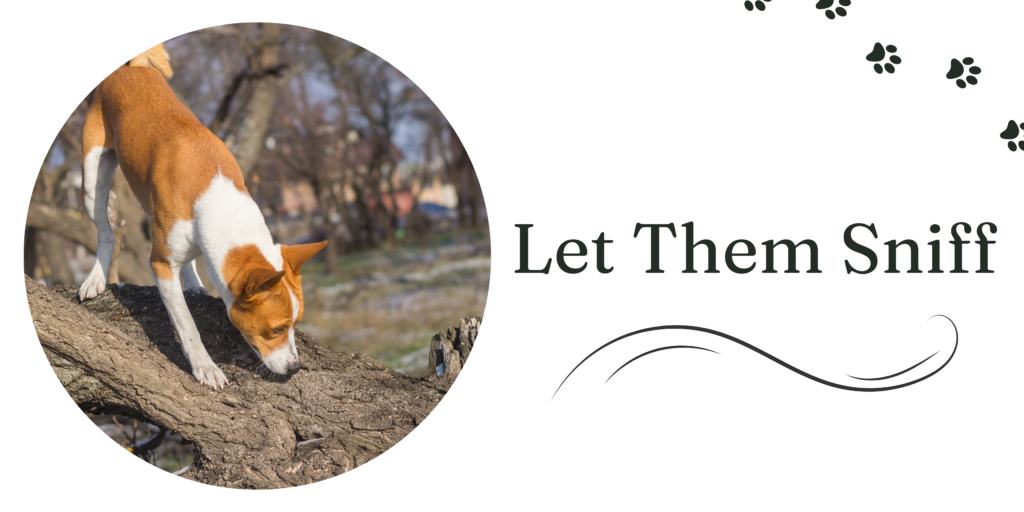
A “sniffari” — a walk where the dog chooses the route and the pace, and you follow — is not a lazy walk. It is a cognitively intensive enrichment session. Twenty minutes of unrestricted sniffing produces more visible relaxation in many dogs than an hour of brisk heeling.
Practical Ways to Enrich Your Dog’s Olfactory Life
- Sniffari walks: Dedicate at least one walk per day to letting your dog lead. No destination, no pace requirement.
- Scatter feeding: Toss kibble or treats into grass or a snuffle mat and let your dog forage.
- Hide and seek: Hide treats or toys around a room and encourage your dog to search.
- Nosework classes: Structured scent detection training builds confidence and provides intense mental stimulation.
- Novel scents: Introduce safe, interesting scents to your home or garden — herbs, spices, or safe essential oils on toys.
The Bottom Line
https://doi.org/10.1002/ar.20592
https://doi.org/10.1098/rsif.2009.0490
https://doi.org/10.1016/j.applanim.2018.12.009
https://doi.org/10.3390/ani16030453
Sign Up For The Newsletter
Stay updated with new blog posts, dog behaviour ideas, seasonal reminders and news about courses and packages. No spam, unsubscribe anytime.