Have you ever noticed your dog suddenly yawn when a stranger leans in to pet them? Or turn their head away when you call their name in a stern voice? These small movements are not random — they are part of a communication system dogs use to avoid conflict and manage social tension. Learning to spot them can change how you understand your dog.
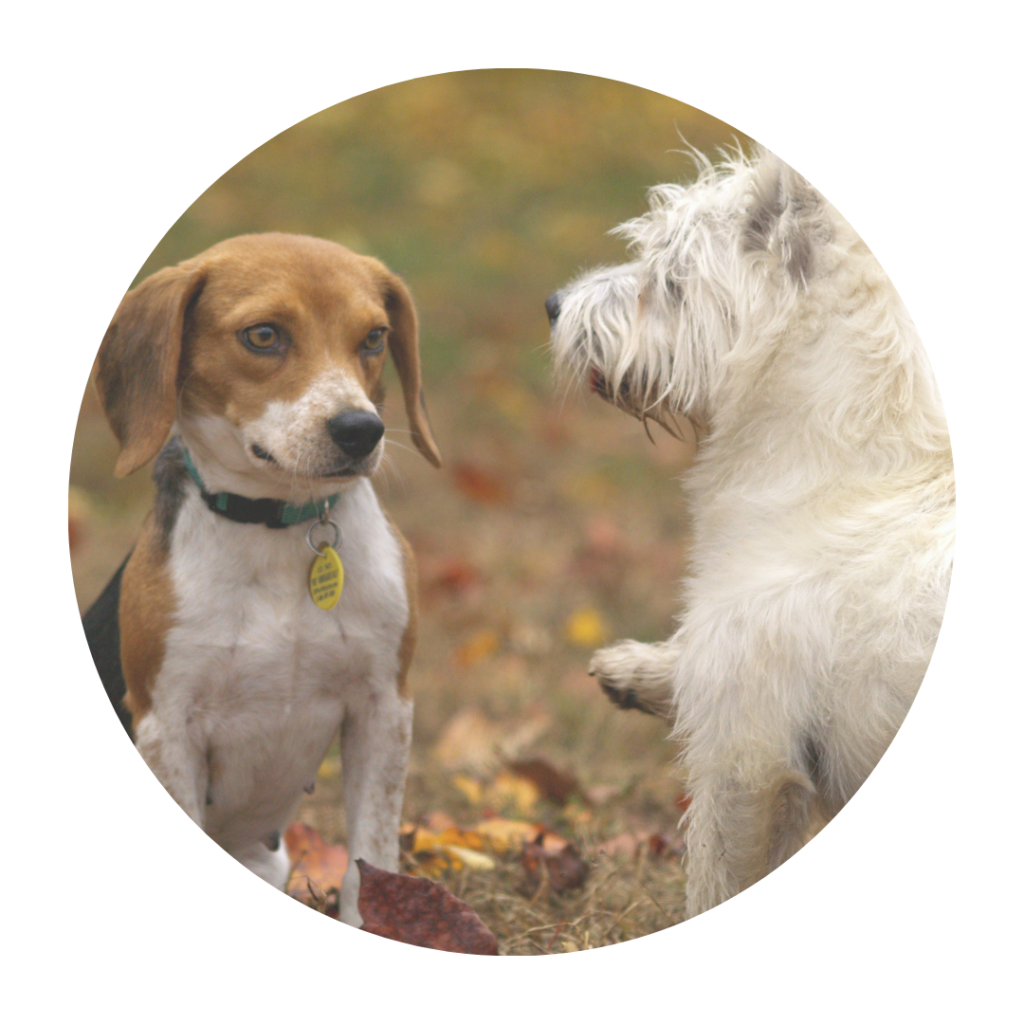
Most dog owners know the obvious signs: a wagging tail means happy, a growl means back off. But dogs communicate far more subtly than that. Long before a dog barks, lunges, or bites, they send a stream of small signals designed to calm a situation down — or to calm themselves. These are called calming signals.
What Are Calming Signals?
The concept comes from Norwegian dog trainer Turid Rugaas, who spent decades observing how dogs use specific body movements to de-escalate tension, avoid fights, and signal peaceful intentions. For years, her observations were based on experience rather than controlled experiments. Then, in 2017, a research team at the University of Pisa put them to the test.
In a study of 24 dogs meeting both familiar and unfamiliar dogs off-leash, the researchers recorded 2,130 calming signals over 96 encounters. They found that these behaviors were not accidental. Dogs displayed them far more often during social interaction than when alone, and they used significantly more signals when meeting unfamiliar dogs — exactly when tension is highest.
The most important finding? Calming signals work. When a dog displayed these behaviors after receiving aggression from another dog, the aggression de-escalated in nearly 80% of cases.
Your dog’s small gestures are not passive reactions. They are active tools for conflict prevention.
What Calming Signals Look Like
Here are the most common calming signals researchers observed, along with what they mean in context. Remember: a single behavior is not a diagnosis. Context matters. A yawn can mean tiredness. A sniff can mean an interesting smell. The key is noticing when these behaviors appear during social tension.
Turning the head away. Direct eye contact can feel confrontational to a dog. Averting gaze is one of the most frequent signals, essentially saying “I am not a threat.”
Lip licking or tongue flicks. A quick lick of the nose or lips, often appearing during moments of mild uncertainty or social pressure — for example, when a stranger reaches toward the dog.
Yawning. Dogs yawn when tired, but they also yawn when stressed. A stress yawn tends to be more exaggerated and occurs in situations where sleepiness does not fit — like during a vet exam or when two dogs meet.
Freezing. A sudden stillness, with the body held rigid. This is a pause button — a dog assessing whether a situation is safe before deciding what to do next.
Turning the body away. Presenting the side or back of the body reduces apparent threat and creates distance without retreating.
Sniffing the ground. During a tense social moment, sniffing can be a way to break direct engagement and lower arousal — even when there is nothing particularly interesting to smell.
Slow movement or curved approaches. Dogs often approach each other in arcs rather than straight lines, and slow their pace when uncertain. This is normal canine social etiquette.
Sitting or lying down. Lowering the body posture signals that the dog is not seeking confrontation.
Showing the whites of the eyes (“whale eye”). When a dog turns their head slightly but keeps looking at something, the visible eye white often accompanies discomfort or anxiety.
The “submissive grin.” Some dogs pull their lips back horizontally in a grin-like expression. This is an appeasement gesture, usually accompanied by a loose, wiggly body — very different from the vertical lip lift of an aggressive snarl.
The “Guilty Look” Is Not Guilt
Understanding calming signals becomes urgent when we look at one of the most misinterpreted behaviors in dogs: the so-called guilty look.
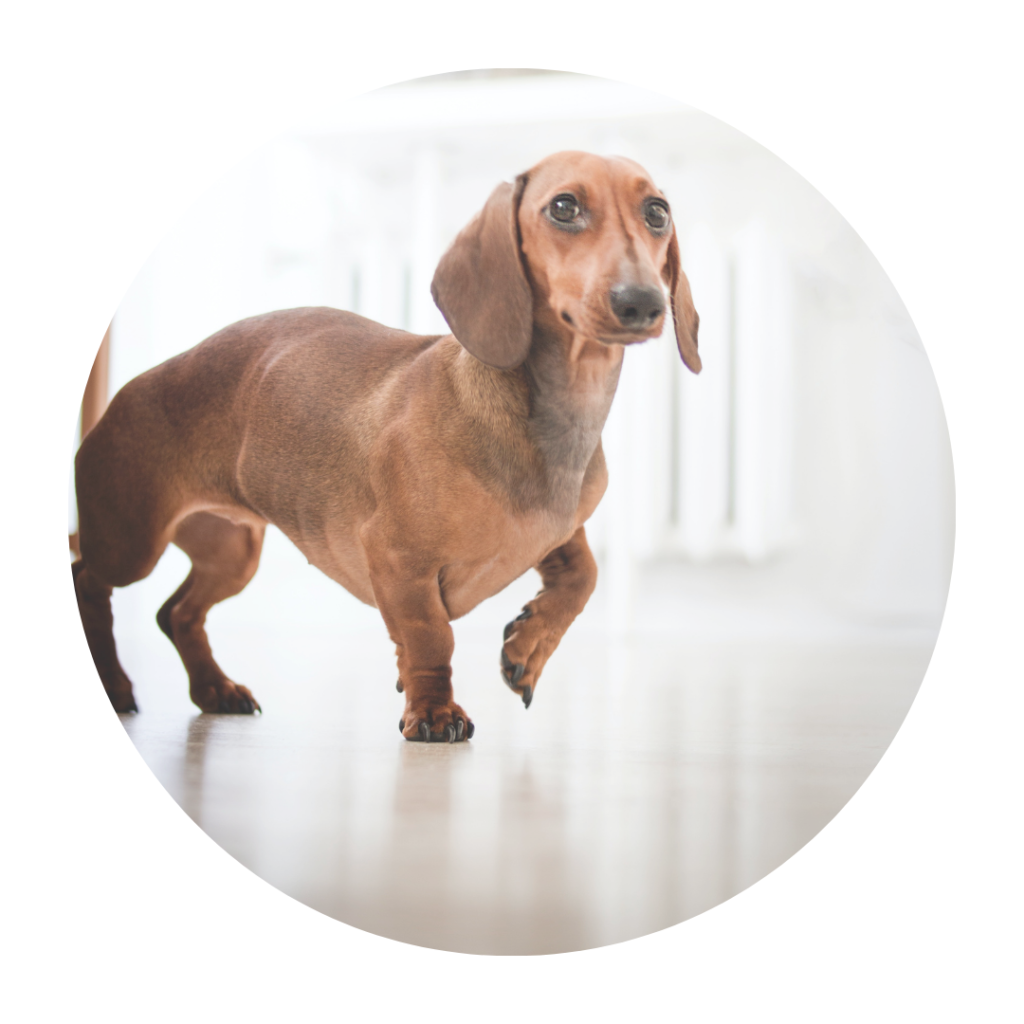
Every owner knows the scene. You come home, discover a chewed shoe, and your dog is slinking low, ears back, eyes averted, tail tucked. It looks like remorse. It is not.
In a landmark 2009 study, researcher Alexandra Horowitz tested whether dogs show these behaviors because they know they did something wrong. Owners commanded their dogs not to eat a treat, then left the room. The experimenter either removed the treat or let the dog eat it. When owners returned, they were sometimes told — incorrectly — that their dog had disobeyed.
The result? Dogs showed no difference in guilty-look behaviors whether they had eaten the treat or not. What mattered was whether the owner scolded them. And the most intense displays came from dogs who had not eaten the treat but were scolded anyway — the innocent ones.
A 2012 replication with 64 dogs confirmed the finding: owners could not tell from their dog’s greeting behavior whether the dog had actually misbehaved. They guessed no better than chance.
A 2015 study then removed scolding entirely. With owners behaving neutrally, there was no guilty look — regardless of whether the dog had eaten the food or whether evidence of the misdeed was visible.
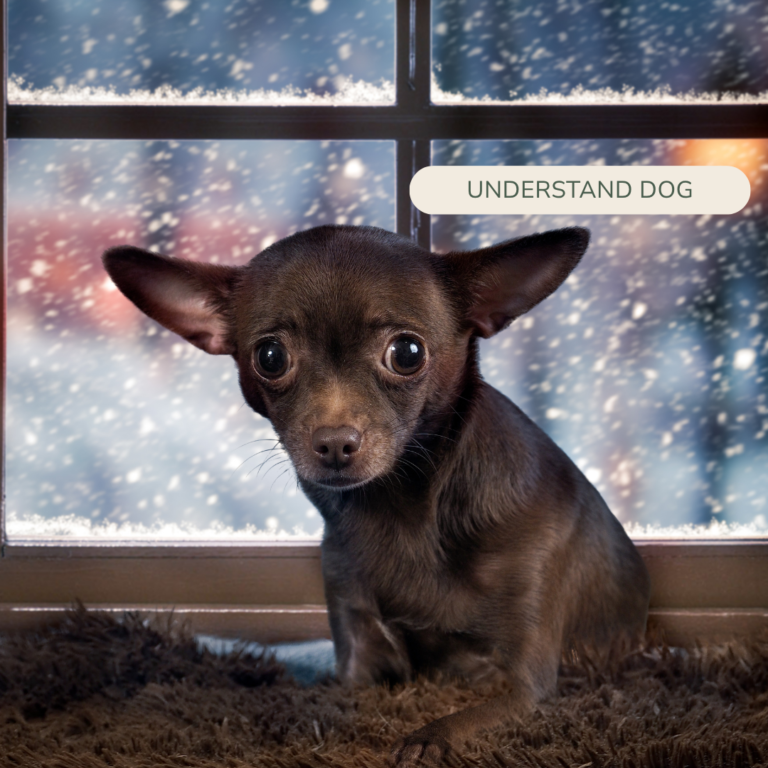
The so-called guilty look is not a confession. It is a set of appeasement and fear behaviors — lowered posture, averted gaze, flattened ears, tucked tail — triggered by the owner’s threatening cues. The dog is not saying “I know I was bad.” They are saying “Please don’t hurt me.” (Read more about the dog-human bond and how it can be affected here)
What This Means for You
When you see calming signals, listen.
If your dog licks their lips, turns away, or freezes during a greeting, they are not being rude. They are communicating discomfort. The appropriate response is to create space, lower the intensity, or give them a choice to move away. Forcing interaction when a dog is signaling stress teaches them that their communication does not work — and eventually, they may skip the signals and escalate directly to a growl or bite.
Stop scolding after the fact.
If you come home to destruction, scolding your dog does not teach them what they did wrong. It teaches them that your arrival predicts threat. The appeasement behaviors that follow are not proof the message got through. They are proof that your dog is afraid of you.
Address the cause, not the symptom.
If your dog regularly shows stress signals in situations that should be neutral — greetings, training, being left alone — ask why:
- Are they bored or under-stimulated?
- Do they have separation anxiety?
- Are they sensitive to noise, routine changes, or your own emotional state?
- Is a medical issue causing discomfort or irritability?
The Bottom Line
Calming signals are a window into your dog’s emotional world. They are not a problem to eliminate. They are information to use. Every time your dog turns their head, licks their lips, or slows their approach, they are speaking a language that evolved to keep the social peace. Learning to read these signals does not just make you a better owner. It makes you someone your dog can actually talk to.
Sources
Rugaas, T. (2006) — On Talking Terms with Dogs: Calming Signals. Dogwise Publishing.
https://www.dogwise.com/on-talking-terms-with-dogs-calming-signals-2nd-edition/
https://www.dogwise.com/on-talking-terms-with-dogs-calming-signals-2nd-edition/
Mariti, C. et al. (2017) — Analysis of the intraspecific visual communication in the domestic dog (Canis familiaris): A pilot study on the case of calming signals. Journal of Veterinary Behavior, 18, 49–55.
https://doi.org/10.1016/j.jveb.2016.12.009
https://doi.org/10.1016/j.jveb.2016.12.009
Horowitz, A. (2009) — Disambiguating the “guilty look”: Salient prompts to a familiar dog behaviour. Behavioural Processes, 81(3), 447–452.
https://doi.org/10.1016/j.beproc.2009.03.014
https://doi.org/10.1016/j.beproc.2009.03.014
Hecht, J., Miklósi, Á. & Gácsi, M. (2012) — Behavioral assessment and owner perceptions of behaviors associated with guilt in dogs. Applied Animal Behaviour Science, 139(1–2), 134–142.
https://doi.org/10.1016/j.applanim.2012.02.015
https://doi.org/10.1016/j.applanim.2012.02.015
Ostojić, L., Tkalčić, M. & Clayton, N.S. (2015) — Are owners’ reports of their dogs’ “guilty look” influenced by the dogs’ action and evidence of the misdeed? Behavioural Processes, 111, 97–100.
https://doi.org/10.1016/j.beproc.2014.12.010
https://doi.org/10.1016/j.beproc.2014.12.010
Sign Up For The Newsletter
Stay updated with new blog posts, dog behaviour ideas, seasonal reminders and news about courses and packages. No spam, unsubscribe anytime.